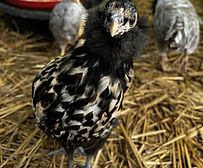
Lemon Owlbeards

The Dutch Lemon Owlbeard is a rare and striking ornamental chicken originating from the Netherlands, prized for its unique facial features and soft, elegant coloring. True to the Owlbeard name, this breed has a full beard and muff with no visible comb or wattles, giving it a rounded, expressive appearance. The lemon variety is especially eye-catching, featuring pale cream to light white feathers accented with delicate black or blue ticking, creating a refined and balanced look that stands out in any flock.
Despite their refined looks, Dutch Lemon Owlbeards have a quirky and engaging personality. They are surprisingly active, curious, and always on the move, often investigating anything new in their environment. Their gentle and friendly nature makes them easy to handle, while their inquisitive streak adds plenty of entertainment to the flock. They lay small white eggs at a modest rate and are best suited for keepers who value beauty, personality, and rarity over production. Cold-hardy when kept dry and clean, their charm and uniqueness make them a standout choice for ornamental flocks and specialty hatching eggs or chicks.
Our Dutch Lemon Owlbeards originate from GreenFire Farms (the only importer currently), providing a strong foundation of quality and genetic diversity. We are committed to a thoughtful, long-term breeding program focused on improving type, color clarity, and overall vigor while preserving the unique characteristics of the breed. Moving forward, we plan to use a structured line-breeding approach. The best rooster and select hens will form our primary breeding pen, while top female offspring will be paired with a very close second-best rooster in a secondary pen. Female offspring from that pairing will then be bred back into the primary pen, while promising offspring from the secondary rooster will also be evaluated and incorporated with hens from the first pen. This method allows us to refine desirable traits, maintain consistency, and strengthen the line without sacrificing health or temperament.
We have not quite yet hitting laying age, but should be laying in early spring and after a test hatch we will offer chicks/hatching eggs.
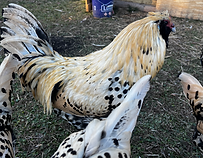


Lemon Owlbeards